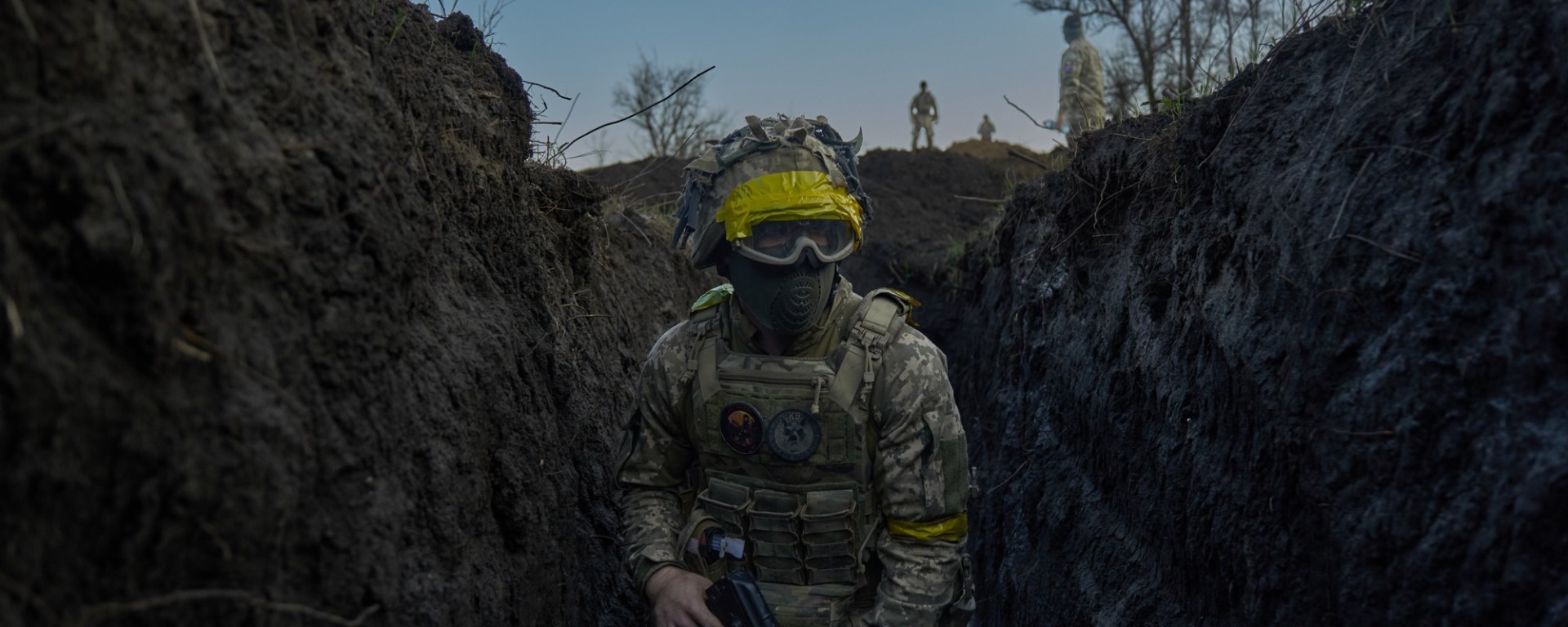
His nome de guerre is ADAMS. When we first met, I barely noticed him. Silent and quite short in a crowd of loud and chain smoking soldiers. He was much younger than the others. After a day or two, we understood that he knew a bit of English. The next days, it started to make sense. He was a cadet from the officers’ school. For a few weeks, we did planning exercises, discussed tactics and ate lunch together in the forest. He had family and friends, a gun and his own plate carrier home in eastern Ukraine. And for most of his life, his country had been at war.
We’ve kept in contact since then. And recently, he graduated from the military academy. A big day, of course. But also a ticket to a life of austerity and constant danger.
Before we begin, let’s state the obvious. ADAMS and I are not native English speakers. It means that our language may be perceived as stiff or limping during the interview. Normally, I would have translated the text into Swedish. But since the text may be of interest to ADAMS family and his comrades, I’ll publish it in English.
And so, we begin.
You’re quite young for being a military commander – you could have lived several years in relative peace without being mobilised as a soldier. What has made you choose the hazardous life as an officer during a war?
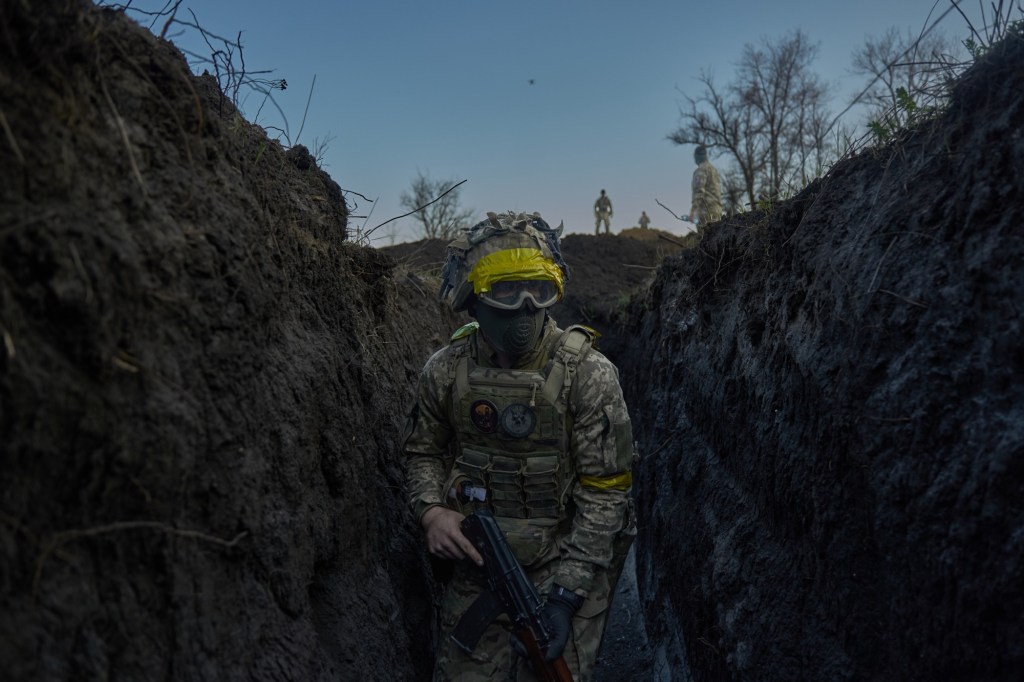
– My callsign is ”ADAMS”. I am 21 years old. I’ve graduated from a military educational institution. At the moment I am doing my military service in one of the military units of the National Guard of Ukraine as a commander of a reconnaissance platoon.
– My country is now actively fighting against our enemy and I could not calmly look at it. When I was still studying at school I always felt that I wanted to be one of those who would be ready to defend their people and their country at any cost and that is why I never considered the possibility of joining civilian institutions of higher education.
Your city of birth and your current home city have both been continuously and indiscriminately bombed during the war. In what way does it affect your motivation and fighting spirit?
– My home city is Zaporizhzhya. It is constantly being hit by enemy missiles, guided aerial bombs and Shahed drones. Such strikes kill children and adults, who are our future generation. When I see it with my own eyes or through the news, my hatred for the aggressor’s country becomes as high as possible and it makes me even more eager not to allow the enemy to pass further on the land of my motherland.
How do you keep morale up within the units considering the constant pressures and hazards?
– In fact, it is a very difficult job that requires a lot of effort. By maintaining morale, we ensure 100% efficiency during combat missions. If the soldiers see a confident commander who knows what he is doing, it will keep morale high. Whenever possible, we spend our free time together so that they see me not only as a commander but also as a close friend. Regular conversations with each other also help to see what problems a person has, and when you help them, it increases their trust in you and they will be ready to follow you. Also, constant jokes help relieve stress, which would otherwise weaken the morale. Singing songs in your free time is a great morale booster, it’s very energizing.
Being a soldier is often a bit strange. The enemy is often guys like us, but with a different loyalty. And we don’t have a grudge with the enemy as individuals. In Ukraine, many of the enemy soldiers are even Ukrainians who have been forced to fight for the Russian regime. How do you feel about fighting them and potentially killing them?
– To me they are enemies too, and I don’t feel sorry for any of them. They made their choice, which they will regret in time.
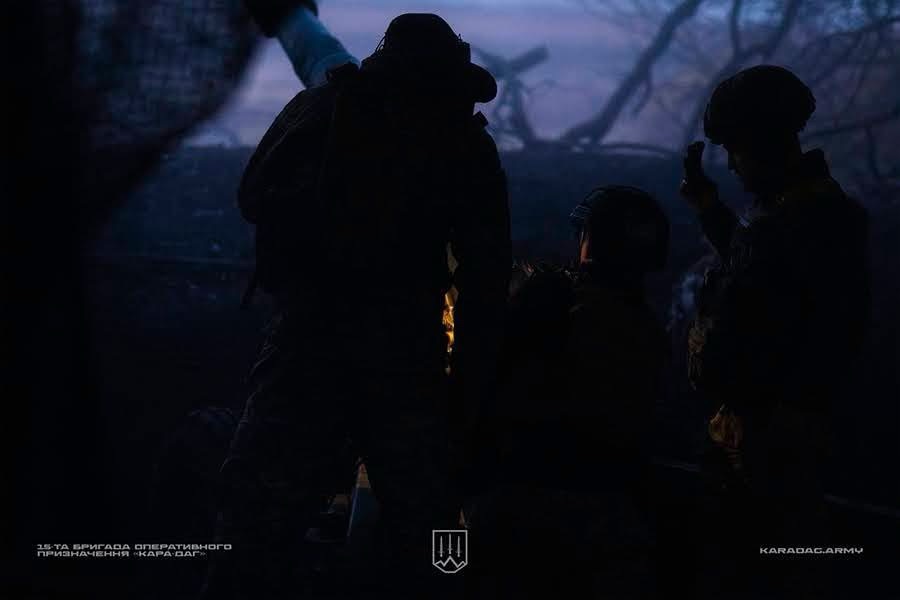
You’re an officer in the National Guard of Ukraine now. The structure of the Ukrainian Armed Forces can seem a little bit complicated for a Swedish reader, since you have the army, the marines, the airborne forces, the National Guard (NGU), the Territorial Defence Forces (TDF), the intelligence service (HUR) and the security service (SBU), all doing ground combat operations in the country. How would you describe the NGU in contrast to the army? What is special about the NGU?
– The National Guard of Ukraine is a military formation with law enforcement functions, which is also engaged in protection of public order and ensuring public safety. NGU has many other functions, for example:
– protection of the constitutional order of Ukraine and the integrity of its territory from attempts to change them by force;
– participation in the implementation of measures related to the cessation of armed conflicts and other provocations at the state border, as well as measures to prevent mass crossing of the state border from the territory of neighbouring states;
– participation in the suppression of mass disorders;
– participation in the fulfilment of territorial defence tasks;
– This is a small list of the functions we perform, the full list is spelled out in the Law of Ukraine ”On the National Guard of Ukraine”.
– At the moment, we are performing tasks to repel armed aggression against Ukraine, and we are one of the most prepared and powerful military structures in our country. The NGU uses new methods and principles of training personnel for combat operations. Only through constant training can we achieve the desired result in combat. Thanks to other countries, we have a lot of excellent equipment and weapons that help us in the fight against the enemy. I would like to emphasise that it is only thanks to the instructors of foreign countries that we can use new weapons with skill and precision, and I am very grateful to all of you.

Is there a cultural or tactical difference between NGU units and regular army units in Ukraine?
– At the moment, we are all one unit and we are performing one task – the defense of our country. Our culture is the same, but the tactics may differ because we are not fighting in the same direction and the tactics of warfare are different everywhere and in many cases depend on the enemy that is against you and the type of mission. After the mission is completed, we analyze the actions to understand what worked and what didn’t, and then we incorporate the combat experience into military guidelines. This is one of the methods of transferring experience. The NGU units and the units of the Armed Forces of Ukraine regularly exchange experience in combat.
You’ve been undergoing officer training for a large part of the war. How is the officers’ education in the NGU organised?
– The training of cadets who would become officers in the future was quite good, but I always wanted something more. Some kind of constant tactical training, shooting and exercises aimed at developing the commander’s thinking on how to manage combat. Of course, without real combat experience, you can’t lead your unit in combat at 150% because the peculiarities of war change almost every day.
– The academy uses many different weapons and equipment simulators to ensure that future commanders can train their personnel to be able to skilfully use and control all available firepower to successfully destroy the enemy on the battlefield.
– Military education in Ukraine is currently undergoing major reforms aimed at improving the quality of training, because our country needs real and courageous commanders. During my studies at the Academy, I took many courses, including military intelligence, general military training, tactical medicine, and sapper training.
What has been the best part of your education?
– The best part of my studies was probably the beginning of my studies after entering the academy and graduation. I remember as soon as I started training and everything surprised me, I was like in a place I had never been before. Graduating from the Academy was one of the best moments in my life, because you’ve become an officer and you have to carry this title with courage. I will always remember the academy, it was a really cool time.
Is there anything you’d change in your military training if you could?
– During my studies, I analyzed the changes that could be made in the academy. For example, to change the composition of teachers in specialized subjects. Increase the number of training field trips and firing from different types of weapons. I can’t say that we didn’t shoot enough, but it would be better if we did it more often.
– I would also like to change the attitude towards the cadets, all of whom are future officers who have consciously chosen this path.
– It would be great to send all the cadets to courses abroad conducted by representatives of different armies, it would have a very positive impact on their English language skills, exchange of experience, as well as tactical and firearms training.
We met some time ago during an international training programme. And I understand that you and some of your colleagues from officers’ school have been attending quite a few international courses. And your English has become really good since we first met! What has the training abroad meant to you?
– Studying abroad for me was primarily an opportunity to learn from the experience of the military of other countries and an opportunity to improve my English for further joint exercises.
– You’ve also seen officer’s from many different Nato countries with their strengths and weaknesses. When I was a cadet, we barely saw a single foreign officer. What have you learned from meeting soldiers and officers from so many different armies?
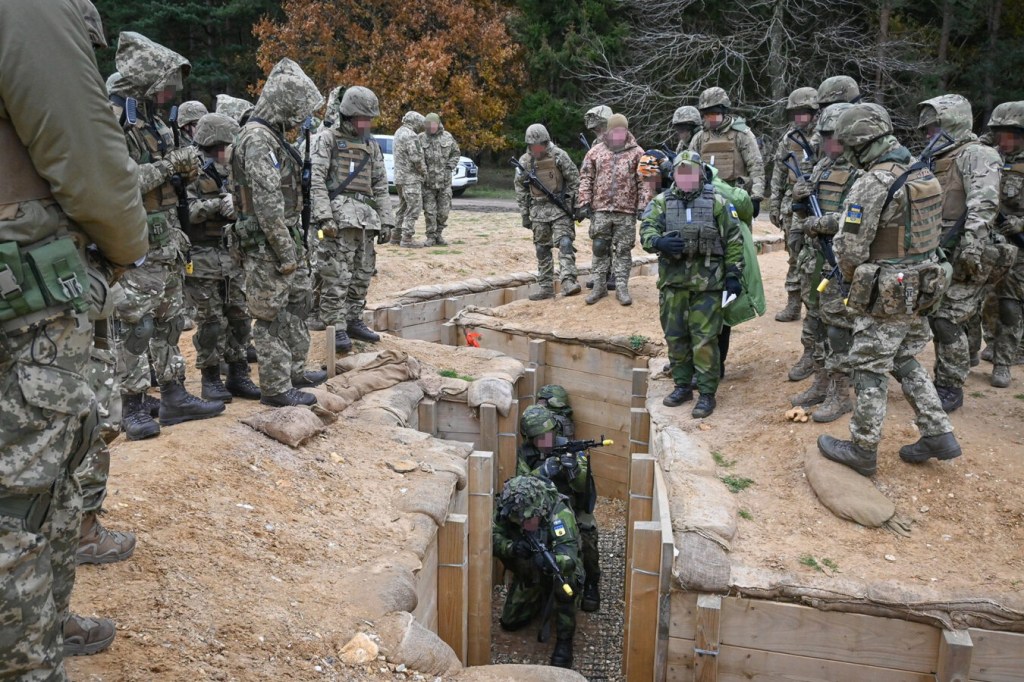
– Meeting with officers, NCOs and soldiers from foreign countries, I learnt to see what a real commander and military team are like. They told me and showed me everything I might need in my future military life, gave me the opportunity to work with them and see new approaches to mission planning, unit management and personnel training.
Your generation of officers is probably different from your older colleagues. How would you describe the new generation of warrior leaders?
– The new generation of officers does not succumb to Soviet narratives; these are officers who do not recognize the old school because they understand its irrelevance to the present. The new generation of officers have new approaches to performing tasks, training personnel, preparing for combat, and open and complex thinking. Unfortunately, today there are many “old” officers who, to some extent, hinder the implementation of all this in the units.
As a Swedish officer, I’ve been frustrated that the Swedish armed forces (SwAF) has been slow in adapting new technology and tactics on the battlefield. The Ukrainian armed forces (UAF) is less coordinated – every unit can develop itself according to its own ideas and needs. On the other hand, less coordination means more chaos and friction between the units. Can you elaborate on your thoughts about innovation in the armed forces of Ukraine (AFU)?
– The Armed Forces of Ukraine include many military units and subunits of various branches. In the context of war, we are constantly adapting best practices to our own way, changing approaches to mission planning, and improving the comprehensive support of personnel. The units also design and manufacture new models of all types of drones, whether they are land, sea or airborne.
What do you think will be the next big innovation on the battlefield?
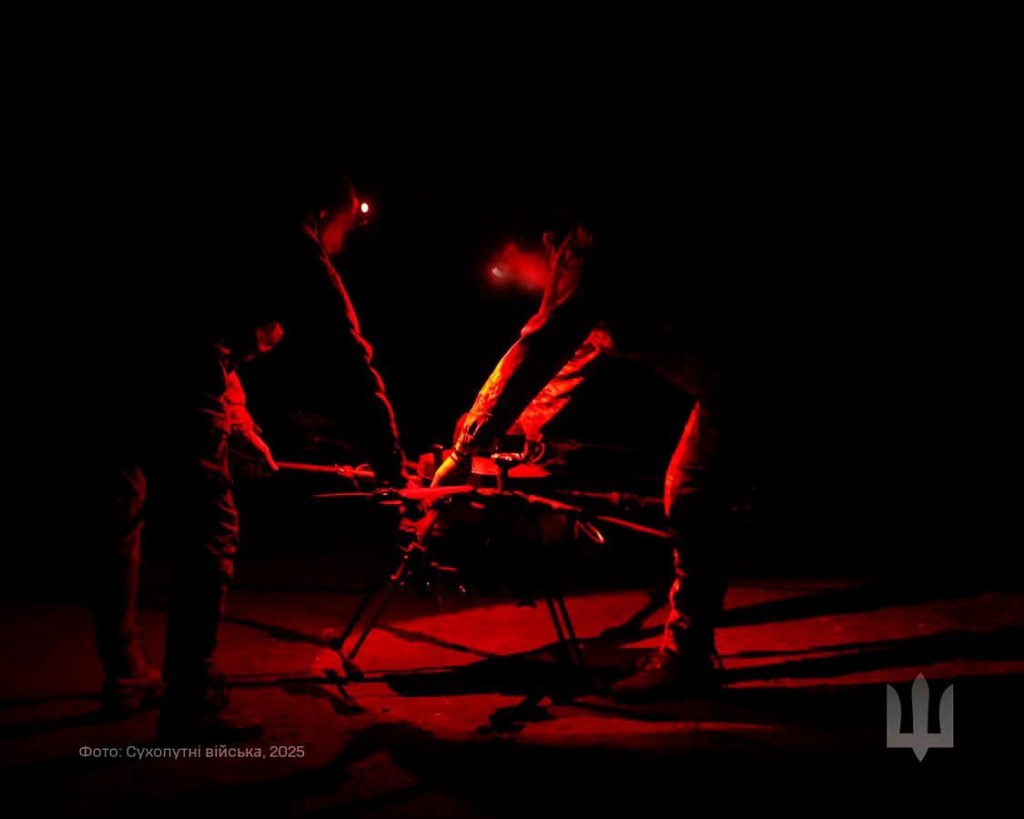
– Drones are developing very rapidly now. I think it will be something related to them to increase the protection of personnel and ensure the effective defeat of the enemy with little or no direct involvement of our troops. In my opinion, this will be the introduction of an increasing number of different land, sea and air drones with improved systems of protection against enemy electronic warfare and with new programs of homing on the enemy.
How would you describe yourself as a leader?
– I listen to my soldiers, I care about their problems, I take my mistakes and my soldiers as a reason to learn, I am always with my soldiers, even on the battlefield, I am a communicative and purposeful commander.
Leadership is a cultural phenomenon. And the AFU is undergoing a huge change, from the older generation of officers trained in the Soviet Union to a younger generation who have been influenced and trained by Nato countries. How does this affect you and your friends?
– My friends and I have seen new approaches to the organisation of military management and the work of a commander thanks to training in NATO countries. This allows us to implement the same principles in our units, which has a positive impact on the development of the armed forces.
Can you elaborate further on that? What differences more specifically?
– During our training abroad, we saw the differences in planning any task: NATO commanders listen to the opinions and suggestions of every soldier. In our country, commanders often limit planning to NCOs. There are also certain differences in the way soldiers are trained: the commander does not scold them, but teaches them how to act in a given situation to avoid mistakes. This proves once again that the Soviet system must disappear once and for all. Because only by punishing soldiers you will not teach them, but you will also worsen their attitude towards you
At the same time, many Ukrainian soldiers are much older than you. They are used to a more traditional leadership, maybe a leadership which is authoritarian and even abusive. What challenges do young and modern officers meet in Ukraine in leading older warriors?
– The first problem I faced was the absence of a previous platoon leader in my unit, and because of this, my soldiers and sergeants had many unresolved personal problems that greatly affected their morale. I never allow myself to be authoritarian in my platoon, many men are much more experienced than I am and therefore I constantly discuss with them everything possible to prevent me from mismanaging. Nowadays, both older and younger soldiers have experience, and age is not an indicator of experience in combat.
– Younger soldiers have good physical fitness, which allows them to plan operations differently. Older soldiers, on the other hand, are not as well developed physically, but they also successfully perform tasks.
– The war hardened me, started and continues to nurture the spirit of a warrior.
In the beginning of the war, almost all Ukrainian soldiers were volunteers or professionals. Today, many soldiers are conscripted. Does that affect your leadership?
– It doesn’t affect my leadership. I can say that the people who have mobilized now have taken a courageous step forward, which can be decisive in our time for the defense of the country. I appreciate their choice, and now it’s my job to do everything so that they don’t regret it and teach them everything to save their lives.
You’re probably one of the youngest officers in Ukraine now. You grew up during during the first part of the war and your whole military training has been conducted during air raids, terror bombing and a genocide against your people in eastern Ukraine. How has the war affected you as a person?
– The war hardened me, started and continues to nurture the spirit of a warrior.
– When I was still studying, there were very often air raids, which were later accompanied by explosions somewhere in the city. Every time the alarm started, I would say to myself, ”God bless you, no one will get hurt. It’s going to come back to you like a boomerang, damn it”.
I don’t lose heart because my people are behind me and this is my homeland, and I don’t want the enemy to harm them.
——- READERS’ Questions——
What do soldiers in Ukraine say about the international training programmes like INTERFLEX?
– I have been to exercises with both the NGU and the Armed Forces, and all the soldiers said that they had never seen such exercises and the preparation for them. Every time they praised the instructors and the country that provided them with all the necessary equipment and uniforms.
– After the training, they always tried to spend time with the instructors just talking or playing some games.
– The general verdict is that this is a great exercise that will only have a positive impact on the training of our soldiers. I personally thank every soldier, sergeant and officer who has conducted and is conducting the courses for us, you are doing a great job.
What kind of weapons do you have on a generic infantry platoon in the NGU?
– In my platoon, it’s any small arms, from assault rifles to machine guns.
– We use Kalashnikovs, UAR-15(10), Kalashnikov machine guns, MG3s and heavy machine guns on a frame, and any kind of RPG.
The Russians are now laying very sophisticated booby traps that turn into entire trap systems.
What kind of skills are most important in an infantry platoon in Ukraine? E g mine detection, mine laying, marksmanship, drone piloting, construction of obstacles…
– For an infantry platoon, useful skills would be mine detection and placement, shooting with all types of weapons, building fortifications, and the ability to move tactically. As for piloting drones, these are useful skills, but this is done by units with drones or unnamed systems, which then transmit information to us for radio stations or closed streaming platforms where we can see what is happening next to us in real time and assess the situation more deeply. These include terrain orientation, endurance and strength, use of special equipment (NVG or thermal sight), first aid for the wounded and organised and coordinated evacuation.
– The infantry must also be stress-resistant and mentally prepared, and quickly adapt to any terrain and weather conditions.
Mines and booby traps seem to be a problem. Is there a need to conduct mine clearance on platoon level?
– Mine clearance is a very difficult and dangerous job, best done by sappers. The Russians are now laying very sophisticated booby traps that turn into entire trap systems. Therefore, it is better not to touch them and leave this task to the sapper unit. If the tripwire does not interfere with the task, it is better to let it pass, having previously noticed it, or to warn the units behind about where it is installed and what kind of ammunition it is. It may take a long time to remove it, and at the moment it may be crucial to the mission
How much of the digging is done by hand and how much is done by machines?
– Most of the time, everything is done manually, but if a position is being prepared in the rear, earth digging machines can be used if the situation allow
What is the most common misconception of the battles in Ukraine?
– In my opinion, this is the idea that the enemy is stupid and does not learn from its mistakes. Our adversary is rapidly gaining momentum in training its troops and implementing combat experience.
How do you adapt to the drone threat?
– At the moment, drones are a widespread problem and it is difficult to fight them because drone operators are looking for gaps in our defences. We need to constantly camouflage our positions, install electronic warfare equipment and monitor their proper operation, and change them to new ones if the radio frequencies become obsolete. Shotguns with shrapnel are also widely used now
Is Russian electronic warfare a big issue? And if it is, how do you manage it?
– This is a big problem, the enemy’s assets jam radio communications, our units with drones cannot always fly to the reconnaissance site because the EW is constantly working, and they have to spend a lot of time looking for an area where they are not affected by EW. The only effective option is to destroy these assets with precision artillery strikes or with drones operating on other radio frequencies to which the EW has not yet switched.

——- SUMMING UP ——
We’re close to ending the interview now. You’re from the southeast of Ukraine. When the war is over and I’m coming to visit you – what should I see and experience in your part of the country?
– In our part of the country, I would advise you to visit Khortytsia Island, Zaporizhzhia or Kharkiv, where you can see the consequences of the enemy’s attacks on the cities.
Last question: every war has an end. What do you dream about doing in the future?
– I don’t really like making any plans for the future, but I really want to build my family and be a real man for them.
Is there anything else you would like to add?
– Thank you for inviting me for this interview, and I hope our cooperation will only grow. Thank you all for supporting us in such a difficult time, without our international partners nothing would have happened. Glory to Ukraine!
 Militär Debatt